RESEARCH
ASTRONOMY · CULTURAL ASTRONOMY · SEASONAL KNOWLEDGE · SPATIAL TIME
Jingmin Ren’s artistic research develops from her long-term exploration of time, light, spiritual energy and the natural world. Drawing on astronomy and cultural astronomy, her current research investigates astronomical time, the Sun–Earth relationship, hemispheric seasonal differences and Spatial Time, while examining how shared astronomical structures are experienced and interpreted through different landscapes, cultures and knowledge systems.
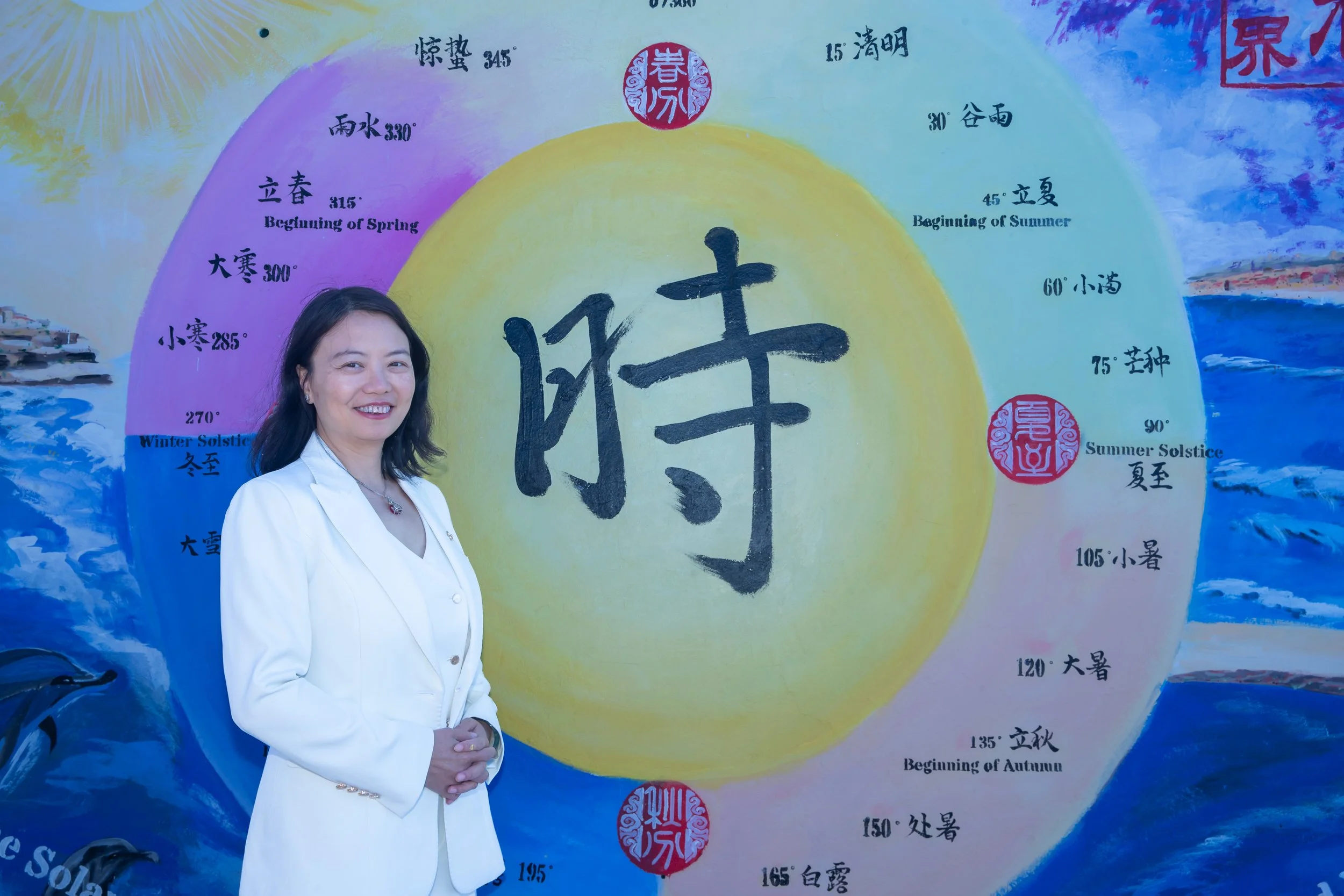
At the centre of this research is Solar Longitude, an ongoing artistic investigation into Solar Longitude (太阳黄经), the Twenty-Four Solar Terms (二十四节气), Southern Hemisphere seasonal-phase translation and the continuing development of Spatial Time.
SOLAR LONGITUDE | 太阳黄经
The Same Solar Longitude. Different Seasons.
Solar Longitude is an ongoing artistic research project by Jingmin Ren (任静敏), investigating solar longitude, the Twenty-Four Solar Terms (二十四节气), Southern Hemisphere seasonal experience and the relationship between astronomical time and locally experienced seasons.
The research begins from a simple but fundamental observation: while Solar Longitude provides a shared astronomical coordinate for the Earth–Sun relationship, the same solar position is experienced through different seasons in the Northern and Southern Hemispheres.
Through artistic research, public art, painting, Chinese calligraphy, sculpture and sustained observation of nature, Ren explores how this shared celestial structure can be translated through different landscapes, seasonal conditions and cultural perspectives.
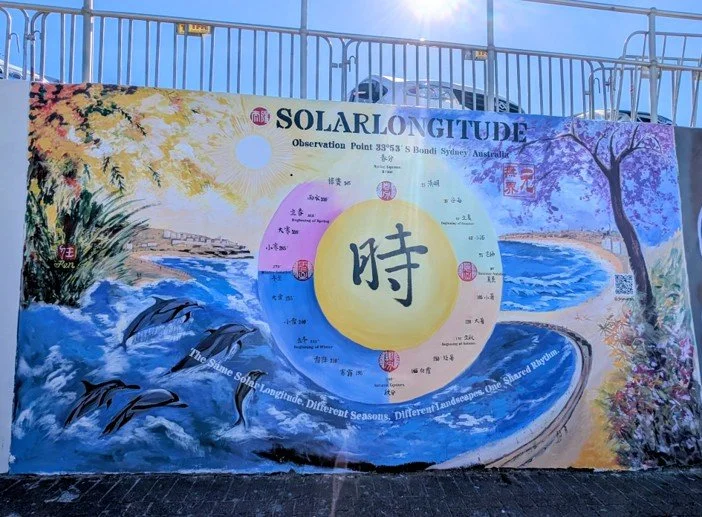
THE SAME SOLAR LONGITUDE. DIFFERENT SEASONS.
A SOUTHERN HEMISPHERE PERSPECTIVE
Solar Longitude is a universal astronomical coordinate system from 0° to 360°, shared across the Earth. Its astronomical coordinates remain unchanged between hemispheres, while their seasonal experience differs according to hemisphere, place and observational perspective.
Because Earth’s axis is tilted by approximately 23.4°, the Northern and Southern Hemispheres experience opposing seasonal cycles. Thus, while the March Equinox at Solar Longitude 0° is associated with spring in the Northern Hemisphere, it corresponds to autumn in Australia; the September Equinox marks the Southern Hemisphere spring equinox.
Viewed from above the South Celestial Pole, the annual cycle may also be visualised clockwise, rather than in the counterclockwise orientation commonly shown from a northern celestial perspective. This change of viewpoint does not alter astronomical Solar Longitude.
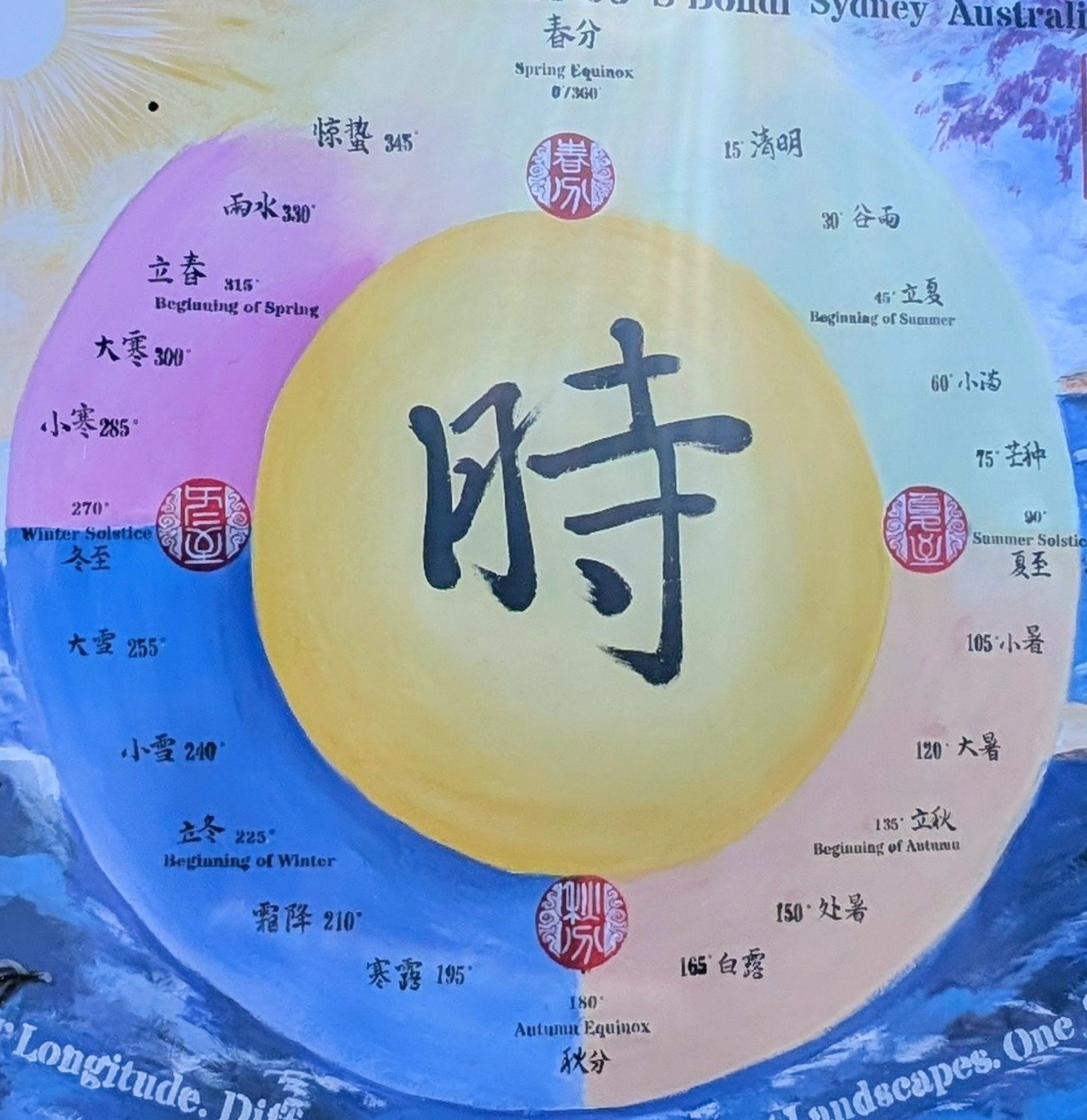
Building on this distinction, Solar Longitude – Time Orbit retains the globally shared astronomical coordinate system while proposing an artistic-research framework of “Southern Hemisphere Seasonal Reading.” Within this framework, the Australian Spring Equinox (September Equinox) is designated “Seasonal 0°,” followed clockwise by Summer Solstice at Seasonal 90°, Autumn Equinox at Seasonal 180°, and Winter Solstice at Seasonal 270°.
“Seasonal 0°” does not redefine astronomical Solar Longitude 0°. It functions instead as an artistic-research coordinate for translating seasonal experience from a Southern Hemisphere perspective.
Through this approach, the research explores how the Twenty-Four Solar Terms (二十四节气) may be encountered and reinterpreted through Southern Hemisphere seasons, landscapes, ecological conditions and cultural perspectives while retaining their astronomical foundation.
The astronomical coordinate remains unchanged; its seasonal reading shifts with hemisphere, place and observational perspective.
THE TWENTY-FOUR SOLAR TERMS | 二十四节气
A SHARED SOLAR FRAMEWORK · A DIFFERENT SEASONAL EXPERIENCE
The Twenty-Four Solar Terms (二十四节气) form a traditional Chinese system of seasonal knowledge structured through the Sun’s apparent annual movement, with each term corresponding to a 15° interval of Solar Longitude.
While the astronomical positions are globally shared, the seasonal and ecological meanings historically associated with the Solar Terms developed within Northern Hemisphere environments. When encountered in Australia, the same Solar Longitudes occur within an opposite seasonal cycle and a distinct ecological landscape.
Ren’s research therefore approaches the Twenty-Four Solar Terms not as a fixed calendar to be transferred directly from one hemisphere to another, but as a solar framework that can be seasonally read through place. From a Southern Hemisphere perspective, the work investigates how the terms may enter into dialogue with Australian seasons, local landscapes and observed natural phenomena while retaining their relationship to the shared solar cycle.
The solar coordinate is shared; seasonal knowledge is experienced through place.
ARTISTIC RESEARCH THROUGH PRACTICE
OBSERVATION · SITE · MATERIAL · MAKING
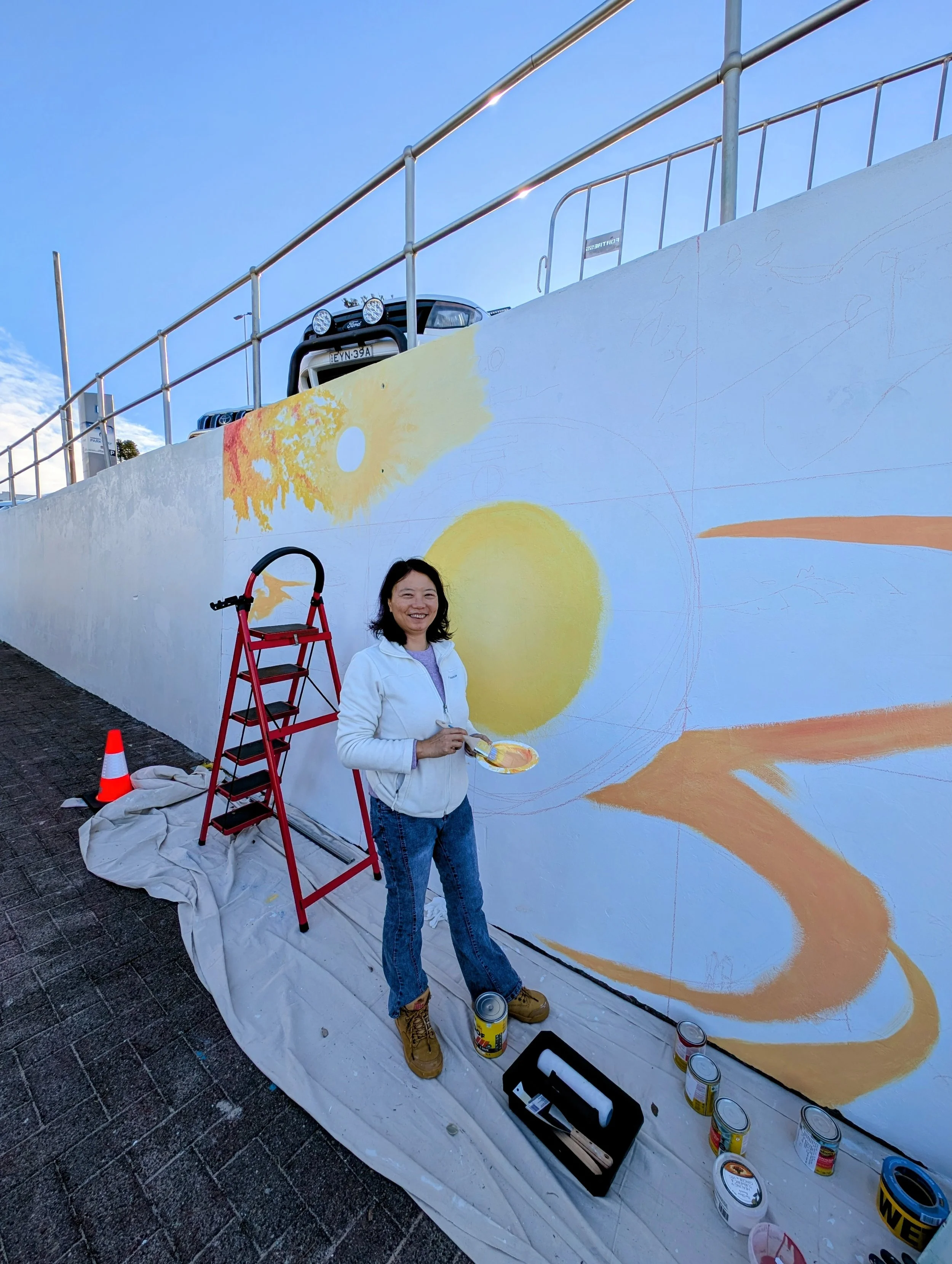
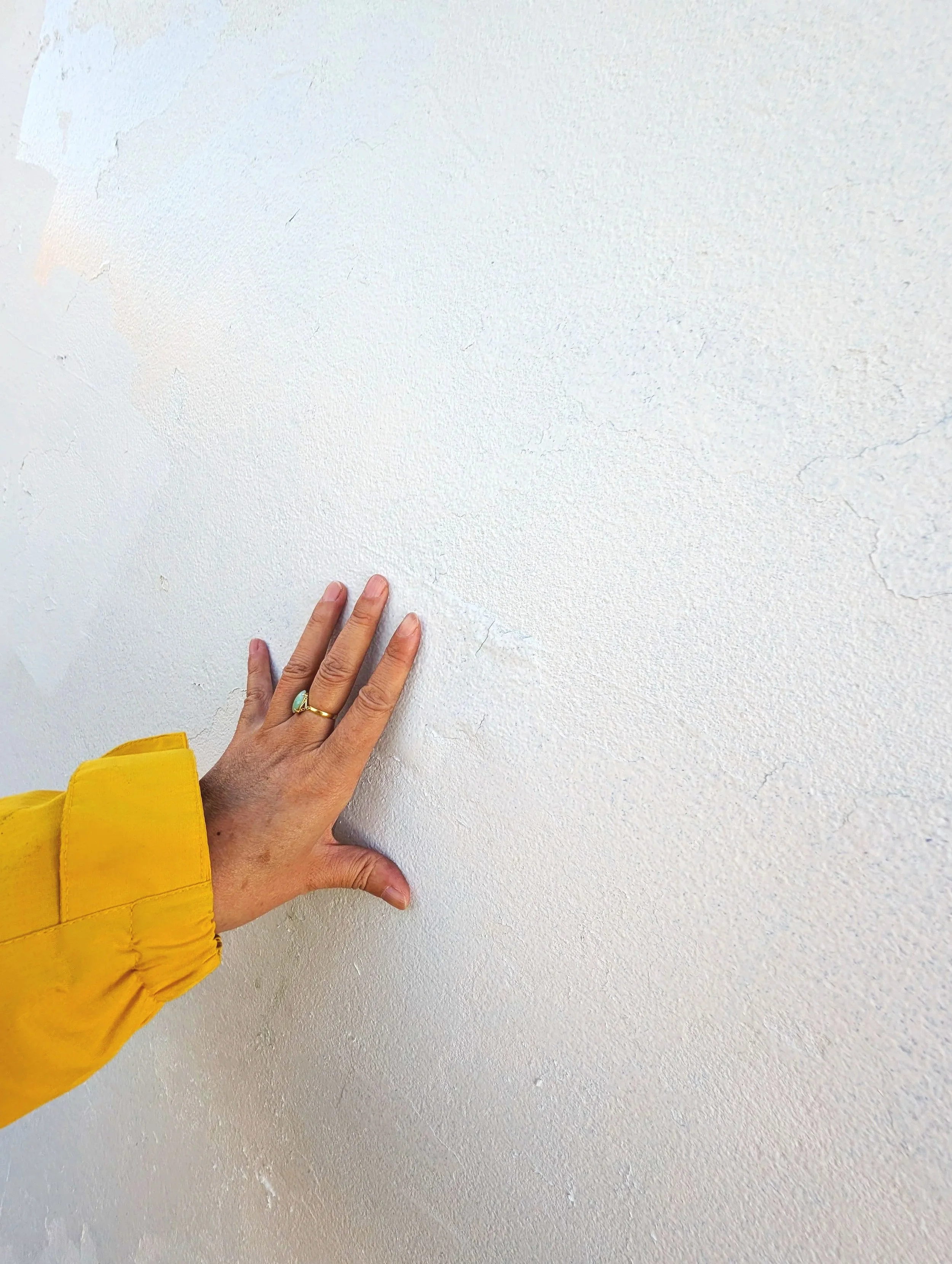
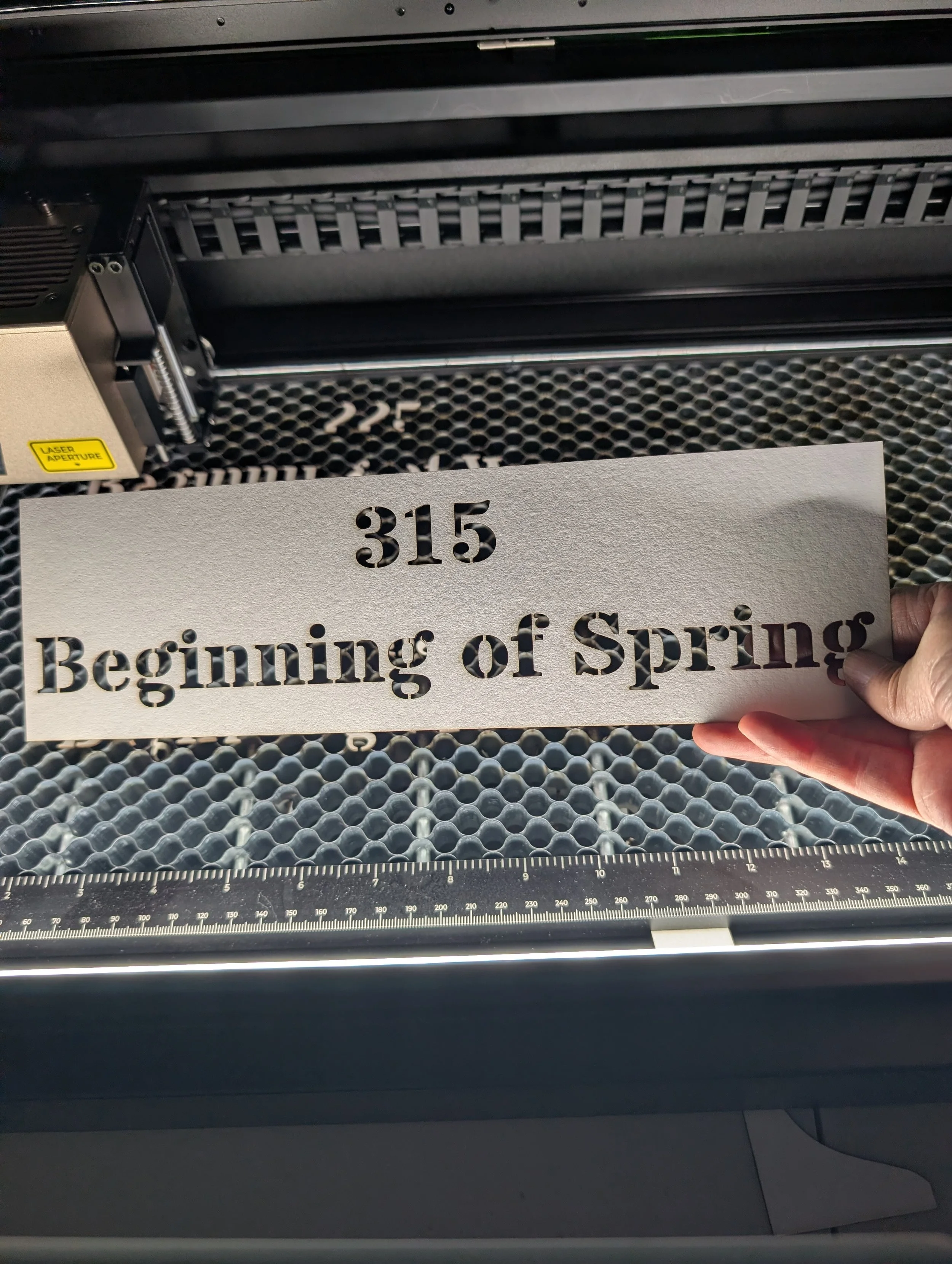
For Jingmin Ren, artistic research is developed not only through written inquiry, but through observation, material experimentation, site-specific practice and making.
Painting, Chinese calligraphy, seal traditions, public art and sculpture operate as interconnected research methods through which questions of time, solar cycles, seasonal experience, place and cultural knowledge are explored.
In Solar Longitude, the physical environment is part of the research itself. The location of Bondi, its Southern Hemisphere seasonal conditions, changing light, coastal landscape and public setting inform how astronomical and cultural ideas are translated into visual and spatial experience.
This practice-led approach allows research to move between observation, concept, material, artwork and written reflection, with each form contributing to the development of the wider inquiry.
The artwork is not simply an outcome of the research; making is part of the research process.
FROM OBSERVATION TO ARTISTIC RESEARCH
LIGHT · TIME · NATURE · SOLAR OBSERVATION
Ren’s current research has developed from a long-term artistic engagement with light, time and the natural world.
Beginning in 2015, she undertook sustained observation and photography of Sydney sunrises for nearly three years. This daily practice informed her Sydney Morning series and deepened her interest in changing light, natural cycles and the experience of time.
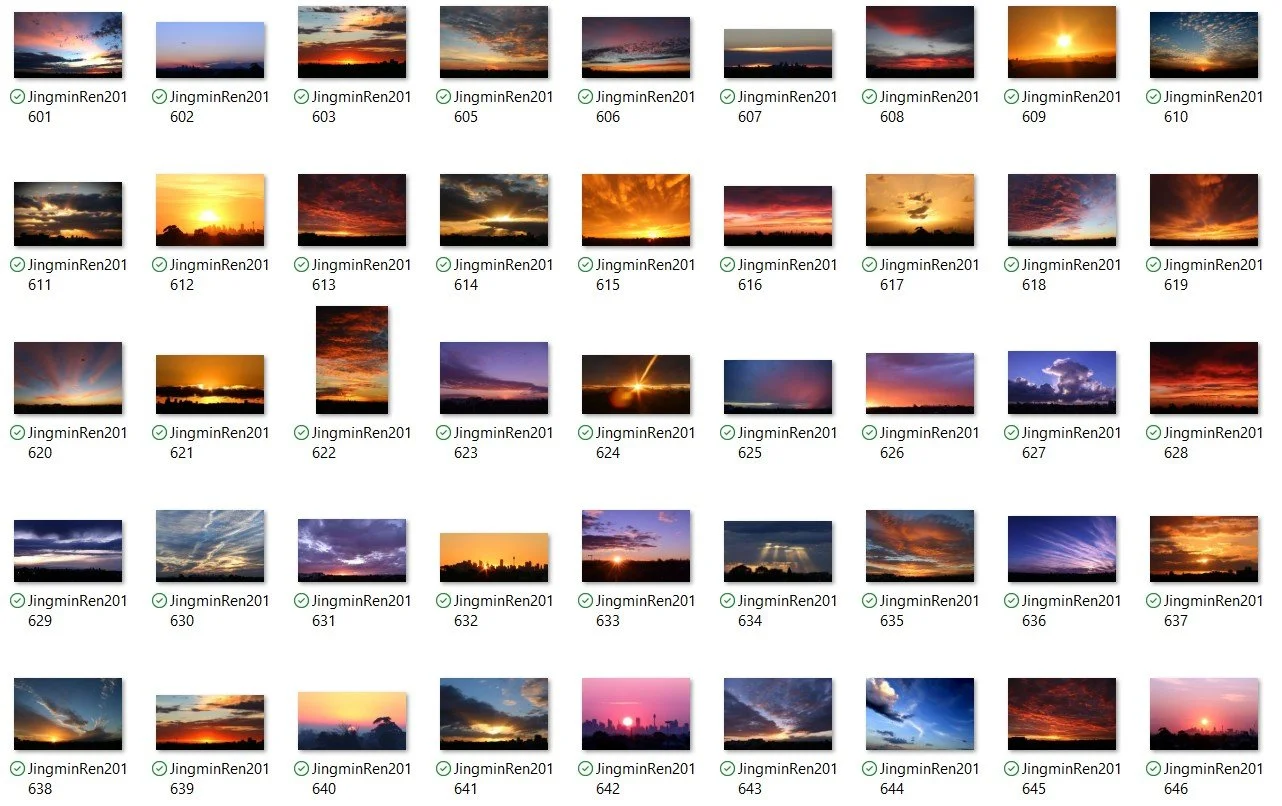
Sydney sunrise observations, from 2015. Photography: Jingmin Ren.
Over subsequent years, these observations expanded from light and natural cycles toward broader questions of time, nature and humanity’s relationship with the environment. In 2026, these long-standing concerns entered a more explicit artistic-research framework through Solar Longitude.
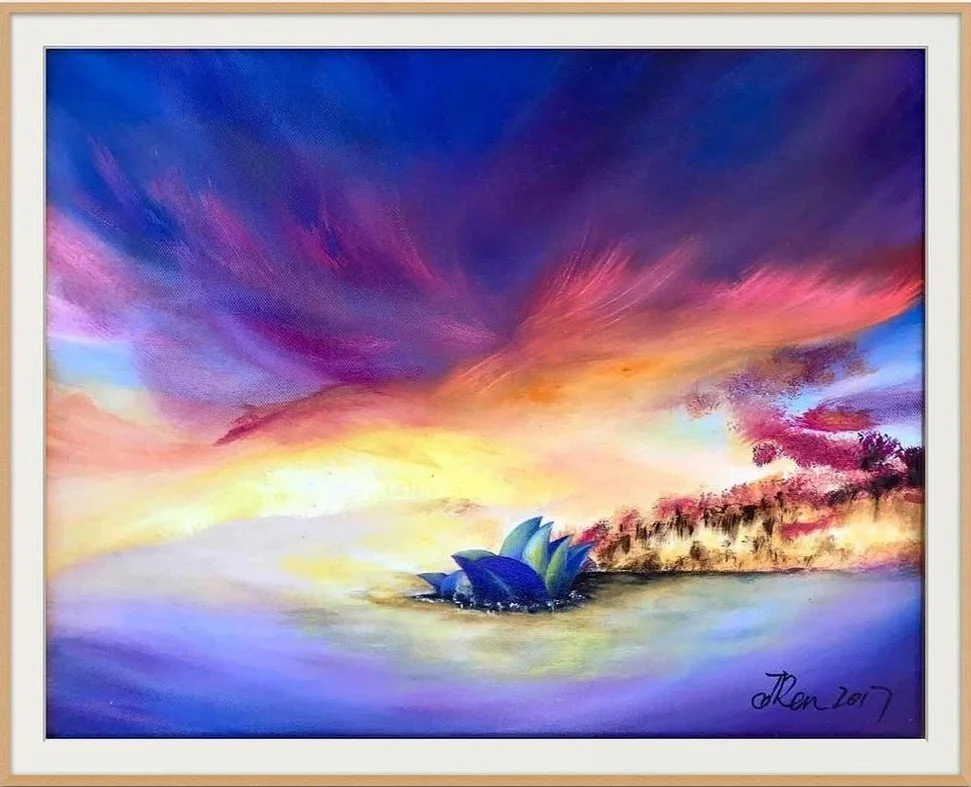
Sydney Morning No. 5 – Glory City | 悉尼清晨5号-瑰丽之都
2017 · Oil on canvas · 45 × 56 cm
Emerging from Ren’s sustained observation of Sydney sunrises, the work translates changing light, atmosphere and the experience of time from photographic observation into painting.What began with observing light gradually became an inquiry into time.
FROM INNER LIGHT TO COSMIC TIME
SPIRITUAL ENERGY · LIGHT · TIME · PERCEPTION
Alongside her sustained observation of the natural world, Ren’s artistic practice has long explored spiritual energy, light, perception and time.
Through her Spiritual Energy Art practice, particularly the Flow of Light series—including works such as Our Star and Eye of Time—light became more than a visible phenomenon. It developed into a means of exploring energy, inner perception, consciousness, time, and humanity’s relationship with the natural and cosmic world.
Over time, this inquiry expanded from inner light to natural cycles, from perception to time, and from human experience to the larger relationship between the Sun, Earth and the cosmos. These long-standing concerns now converge with Ren’s Solar Longitude research, extending her exploration of time into astronomical cycles, seasonal experience, place and cultural perspectives.
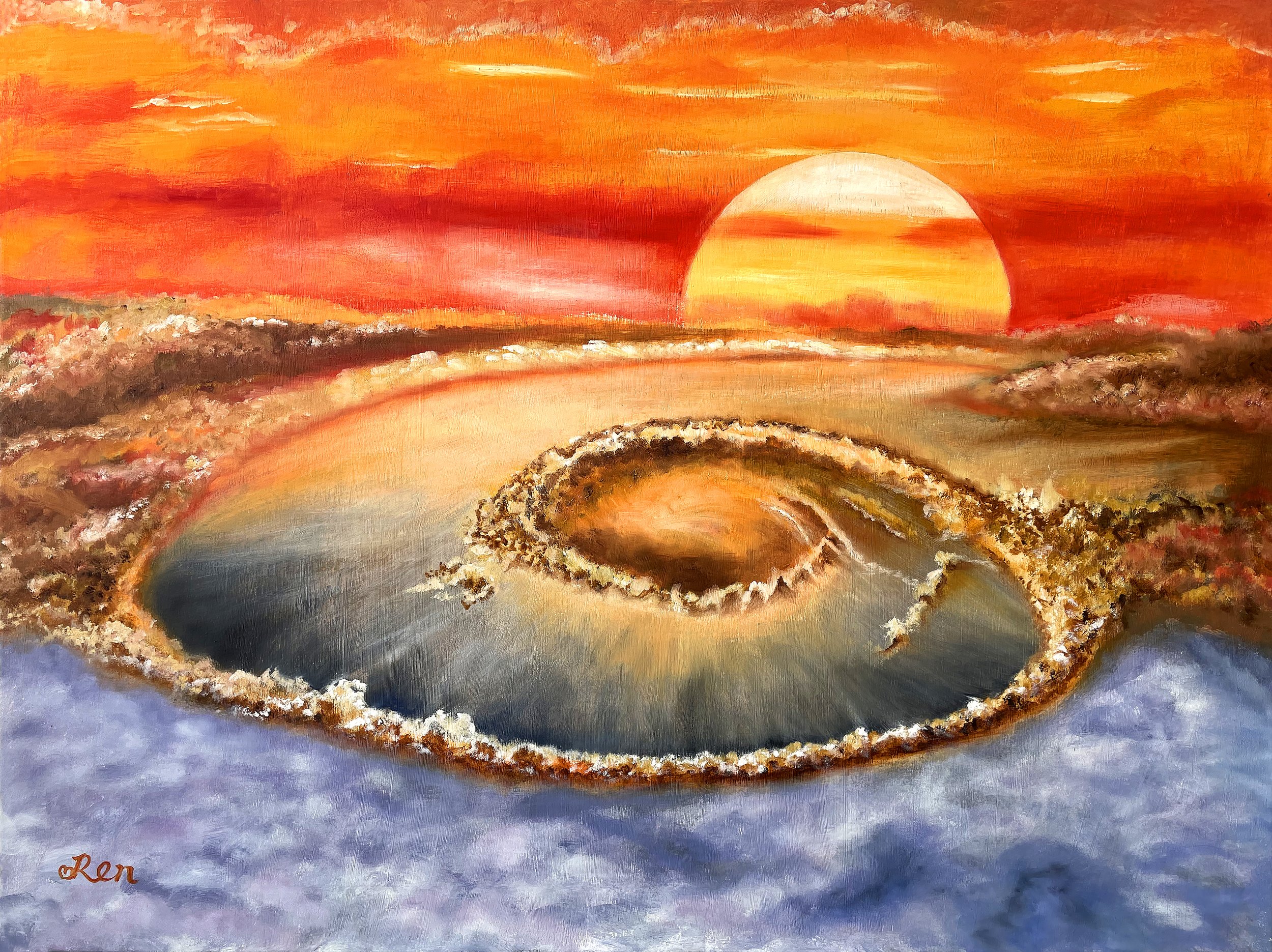
Eye of Time
Flow of Light Series · Jingmin Ren
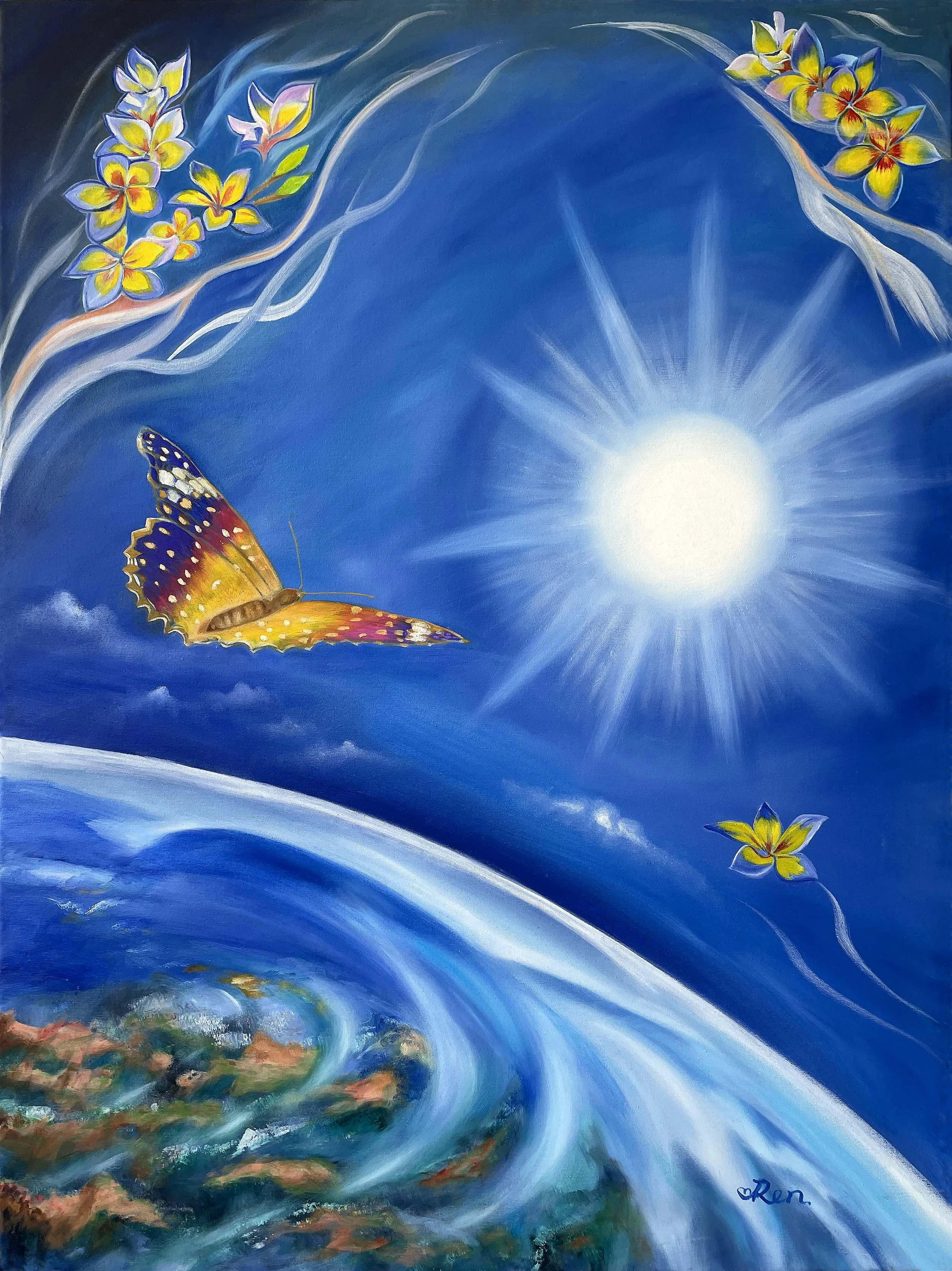
From inner light to solar time, the inquiry into time has remained continuous.
Our Star
Flow of Light Series · Jingmin Ren
FEATURED PUBLICATION
THE SAME SOLAR LONGITUDE, DIFFERENT SEASONS
A Southern Hemisphere Interpretation of the Twenty-Four Solar Terms
Jingmin Ren · 2026
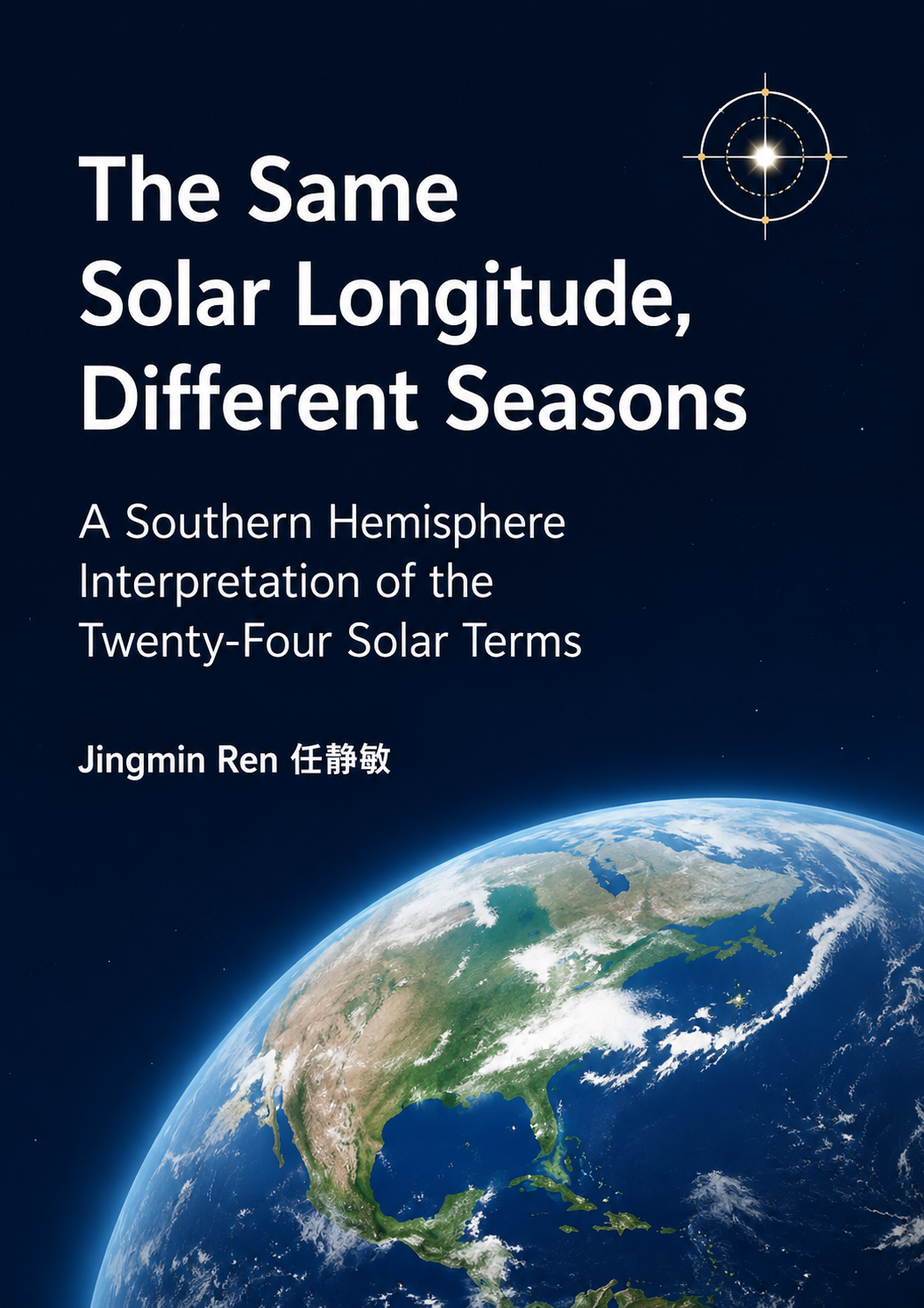
This research examines Solar Longitude as a shared astronomical coordinate while investigating how seasonal experience differs between the Northern and Southern Hemispheres and across local ecological environments.
Bringing together astronomy, the Twenty-Four Solar Terms (二十四节气), cultural perspectives and artistic practice, the study develops a Southern Hemisphere reading of seasonal knowledge and introduces broader questions around seasonal-phase translation and spatial time.
The research provides the conceptual framework for Ren’s ongoing Solar Longitude artistic research and its development across public art, sculpture and interdisciplinary practice.
VERSION 2 · REVISED AND EXPANDED
DOI: 10.5281/zenodo.22018896
PUBLICATIONS & RESEARCH OUTPUTS
RESEARCH · PUBLICATION · ARTISTIC PRACTICE
Ren’s research is developed through interconnected forms of written publication, artistic practice and ongoing interdisciplinary inquiry.
2026 — VERSION 2
The Same Solar Longitude, Different Seasons
A Southern Hemisphere Interpretation of the Twenty-Four Solar Terms
Version 2 · Revised and Expanded
An expanded development of Ren’s research into Solar Longitude, Southern Hemisphere seasonal translation, the Twenty-Four Solar Terms and spatial time.
DOI: 10.5281/zenodo.22018896
2026 — VERSION 1
The Same Solar Longitude, Different Seasons
A Southern Hemisphere Interpretation of the Twenty-Four Solar Terms
Version 1
The first published version establishing the project’s initial research framework and Southern Hemisphere perspective.
Concept DOI: 10.5281/zenodo.20628684
RESEARCHER IDENTITY
ORCID
Jingmin Ren | 任静敏
ORCID: 0009-0003-6620-7514
RESEARCHGATE
Jingmin Ren | 任静敏
Artist–Researcher · Independent Researcher
VIEW RESEARCHGATE PROFILE →
ONGOING RESEARCH
FROM SOLAR TIME TO SPATIAL TIME
Ren’s ongoing research continues to investigate relationships among solar longitude, seasonal knowledge, spatial time, cultural perspectives and lived experience, extending these questions through public art, sculpture and interdisciplinary artistic research.
Current developments explore how astronomical time may be translated into material, spatial and embodied forms, expanding Solar Longitude beyond the mural into new sculptural and research-based works.
From observing time to giving time spatial form.